WellLink Gains Critical Insights from Boston Marathon Medical Tent Preparedness
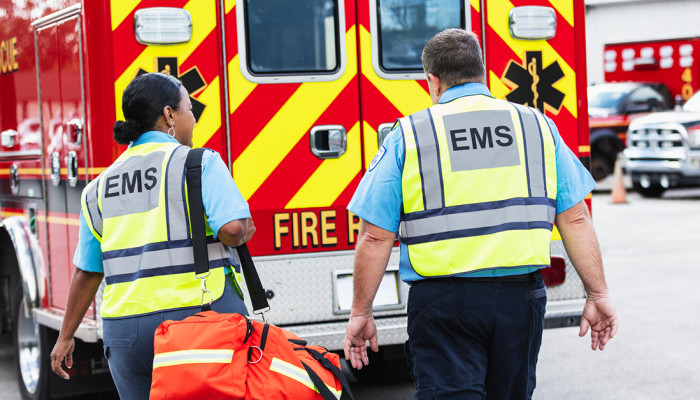
With thousands of runners and up to 3,000 medical encounters in a single day, the Boston Marathon operates one of the most advanced event medical systems in the country.
In April, WellLink Emergency Preparedness Program Manager Christina Fozio was invited behind the scenes to gain firsthand experience and insight into the marathon’s medical tent preparedness and coordinated response efforts.
The Boston Marathon draws more than 25,000 participants and approximately 500,000 spectators annually, making it one of the largest single-day sporting events in the world, requiring extensive emergency preparedness for both runners and spectators.
Thanks to the Beth Israel Deaconess Medical Center (BIDMC) Disaster Medicine Fellowship Program, Fozio gained direct knowledge into how the marathon’s large-scale event preparedness is planned and operated. The one-year program allows fellows to develop expertise in all aspects of disaster medicine through a robust, personalized didactive and field-based curriculum taught by faculty with vast domestic and global experience.
The program provided valuable knowledge from seasoned professionals, including Chris Troyanos, medical coordinator for the Boston Marathon since 1996, and world-renowned physicians in crisis leadership; disaster medicine; chemical, biological, radiological and nuclear response; emergency medical services (EMS) and disaster operations; and event medical coordination.
These experts have played a pivotal role in advancing marathon preparedness, drawing from real-world planning and response efforts, including lessons learned from the 2013 Boston Marathon bombing.
Planned mass gatherings such as the Boston Marathon and other sporting events can be considered potential mass casualty incidents due to the concentration of large populations in defined spaces. These events are only possible because of extensive, proactive planning that enables stakeholders to assess risks, coordinate across agencies, and implement proactive strategies to mitigate harm.
Although a terrorist attack was not specifically anticipated prior to 2013, an all-hazards planning approach was already in place. Years of collaboration among medical teams, public safety agencies, and event organizers created a strong operational foundation, one that proved critical during the 2013 response, when 97 patients were transported from the scene in just 22 minutes.
Reducing Hospital Surge with Medical Tent Management
Medical planning for the Boston Marathon includes detailed analysis of public safety impacts, hospital surge capacity, and on-site runner health management. With a focus on high-volume, on-site care that reduces the need for hospital transport, medical tent management is an essential aspect of preparedness at the Boston Marathon.
The marathon deploys dozens of medical tents and approximately 1,900 medical volunteers along the course and at the finish line. These tents treat thousands of patients in a single day, most presenting with predictable conditions such as dehydration, heat illness, and musculoskeletal injuries.
Due to the effectiveness of these medical tents, combined with detailed planning and highly trained staff and volunteers, the majority of the patients are treated and released on-site, playing a critical role in preventing a surge of low to moderate acuity cases at hospitals.
Three aspects of the Boston Marathon’s preparedness emerge as key strengths:
1. Medical tents function as forward triage hubs.
- Minor issues are treated and discharged on-site.
- Moderate issues are observed, rehydrated, stabilized.
- Severe cases are identified early and transported by EMS.
This approach mirrors an emergency department triage model but shifted upstream into the event environment. Hospitals receive only high-acuity, pre-stabilized patients, which are significantly easier to absorb.
2. Real-time patient tracking, such as bib scanning, is used to monitor patient flow and create system awareness.
- Identifies where patient volumes are increasing.
- Alerts downstream tents and hospitals to prepare.
- Tracks whether a patient is treated, discharged, or transported.
This creates a predictive surge model, allowing hospitals to prepare rather than react.
3. Integration with EMS and regional hospitals supports coordinated transport decisions.
- Ambulances are staged along the route.
- Only select patients are transported.
- Hospitals receive advance notice and patient information.
Medical tent management at the Boston Marathon acts as a fully functional prehospital surge management system, filtering thousands of patients, treating the majority on-site, controlling the flow of serious cases, and distributing demand across time and geography.
Access to the Boston Marathon’s medical operations, one of the most sophisticated event medical systems in the country, provided a rare and highly valuable perspective that strengthens WellLink Health Alliance and the Northeast Ohio Healthcare Coalition’s emergency preparedness capabilities.
“This was an extraordinary experience and a true privilege to observe the behind-the-scenes emergency preparedness of the Boston Marathon,” said Fozio. “Chris has built a strong sense of family among the volunteers, reflecting years of dedication and commitment. Access to the marathon’s medical operations, one of the most sophisticated event medical systems in the country, provided a rare and highly valuable perspective that strengthens WellLink Health Alliance and the Northeast Ohio Healthcare Coalition’s emergency preparedness capabilities.”
Insights from this experience enhance the ability to plan and manage large-scale events, improve interdisciplinary coordination and support real-time decision-making in high-pressure environments.
Translating this experience into best practices for regional planning and response efforts, WellLink and the Healthcare Coalition are positioned to further reduce risk, improve system coordination and strengthen healthcare resilience across Northeast Ohio. This ultimately reinforces WellLink’s commitment to readiness, innovation and the safety of the communities it serves.
The Northeast Ohio Healthcare Coalition is proud to have Chris Troyanos as a speaker at this year’s annual conference on June 5. If you are interested in attending the conference, please register at WellLinkHealthAlliance.com at no cost.