National Rural Health Day: Rural Healthcare Challenges and Solutions
Rural healthcare in America is at a crossroads. An October analysis found that nearly 700 rural hospitals are at risk of closing. At the same time, the federal government is preparing to invest $50 billion over five years through the Rural Health Transformation Program, even as changes to Medicaid funding threaten to increase financial pressures on rural providers.
As we prepare to recognize National Rural Health Day on Nov. 19, there’s an opportunity to examine what’s at stake for rural providers and the communities they serve, and explore the solutions needed to preserve access to essential care.
Rural America: A Healthcare Landscape with Unique Challenges
Rural healthcare providers are the backbone of their communities, delivering essential care, often in the face of significant challenges. From responding to emergencies and managing chronic conditions to supporting families, rural providers strengthen communities and ensure that people have access to care close to home.
Unfortunately, in many rural communities, getting the care people need can mean traveling long distances, navigating limited services or relying on healthcare providers who are stretched thin. Yet, dedicated professionals continue to deliver essential care, support families and find innovative ways to meet their communities’ needs.
According to the U.S. Census Bureau, approximately one in five Americans, or more than 60 million people, live in a rural community. These communities are vital to the nation’s economy and cultural identity, yet these residents often face significant barriers to accessing timely, affordable and high-quality healthcare.
The statistics behind rural health:
- Maternal healthcare: The 2026 March of Dimes Maternity Care Deserts report finds that 70% of rural counties lack a hospital with labor and delivery services, compared with 39% of urban counties.
- Preventable deaths: The Centers for Disease Control and Prevention reports that rural residents are more than likely than urban residents to die prematurely from heart disease, cancer, unintentional injuries, chronic lower respiratory disease and stroke.
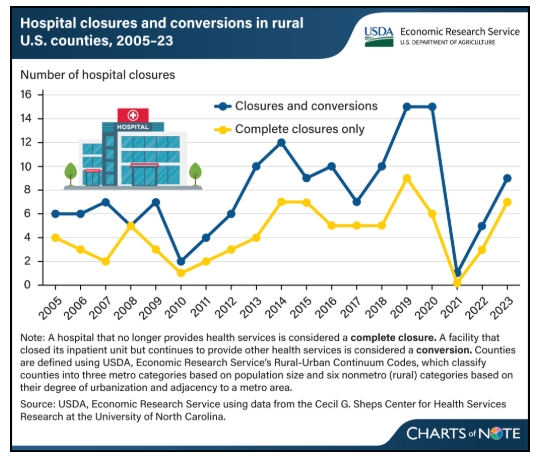
- Hospital closures: Between 2005 and 2023, 146 hospitals in rural U.S. counties closed or were converted to non-acute care. These closures eliminated more than 6,000 hospital beds.
These numbers represent patients traveling hours for specialist appointments, families navigating maternity care without a local labor and delivery hospital, and healthcare professionals working tirelessly to keep essential services available.
The Mounting Pressures on Rural Healthcare Providers: Why are Rural Hospitals Closing?
Healthcare organizations in rural communities face a combination of operational, financial and workforce challenges that make delivering care difficult.
Financial Sustainability and Hospital Closures
Often operating with smaller patient populations and narrower operating margins than their urban counterparts, rural hospitals still must maintain emergency departments, equipment and staffing while providing essential services around the clock.
Medicare and Medicaid reimbursement, uncompensated care, rising labor costs and increasing operational costs all contribute to financial instability. The USDA Economic Research Service identifies financial stress, smaller hospital size and lower occupancy rates as important factors contributing to rural hospital closures and conversions.
To a rural community, a hospital closure can have devastating economic consequences. For some residents, it can mean a loss of employment, reduced economic investment in the community and the loss of a critical community resource.
Workforce Recruitment and Retention
One of rural America’s most persistent challenges is recruiting and retaining healthcare professionals. Geographic isolation, professional burnout, limited access to support and fewer training opportunities make recruitment especially difficult.
The National Rural Health Association’s 2026 policy agenda highlights the need for expanded rural residency programs, nursing pathways and incentives to bring healthcare professionals into underserved communities.
Expanding Healthcare Needs and Shifting Demographics
Rural populations face significant chronic disease burdens, along with the added challenge of limited access to specialty care. Lack of transportation and long travel distances for ongoing treatment or preventive care only add to the challenges associated with serious health problems.
Rural communities continue to experience population changes and an increase in aging residents who require more care. In 2022, 20% of rural residents were 65 or older, compared to 16% in urban areas.
Policy Solutions: Turning Investment into Meaningful Change
There is no simple, single solution to the challenges facing rural healthcare. Meaningful action requires coordinated efforts from federal and state policymakers, healthcare organizations and community leaders.
Several priorities deserve particular attention:
1. Building a Stronger Rural Healthcare Workforce
Improving the rural healthcare workforce requires a coordinated approach that builds local talent pipelines and enhances recruitment and retention. Loan repayment programs, sign-on bonuses, expanded nursing education and rural residency opportunities can help address persistent workforce shortages.
At the same time, proposed changes to federal immigration policy could complicate efforts to recruit healthcare professionals from abroad. Between 2016 and 2022, approximately 11% of physician H-1B applications processed involved physicians serving rural counties. The Trump Administration’s proposed $100,000 fee for certain new H-1B visa petitions would create another barrier for rural healthcare providers. Although federal courts have blocked enforcement of the fee, the Administration continues to pursue the policy through legal challenges.
2. Protecting and Expanding Telehealth Access
Telehealth can connect rural patients with specialists, behavioral health professionals and primary care providers without requiring travel. However, expanding telehealth access also requires reliable internet access, appropriate technology and affordable services. Currently, COVID-era telehealth expansions, which made access to telehealth services more broadly available, have been authorized through the end of 2027 but will need Congressional action to preserve them beyond that date.
3. Protecting Maternal Healthcare
Research from the U.S. Government Accountability Office indicates that the number of rural hospitals providing obstetric services declined from 2004 through 2018, and more than half of rural counties did not have such services in 2018. The March of Dimes reports that 36% of U.S. counties are defined as maternity care deserts, the majority of which are located in rural areas. Investment in regional maternity care networks, transportation and coordinated emergency response can help address gaps in maternal services.
4. Investing in Community-Based Preventive Care
Rural health clinics, mobile screening programs and partnerships with schools and local organizations can improve access to care while helping prevent more serious and costly health conditions.
What Is the Rural Health Transformation Program (RHTP)?
The RHTP represents a significant federal investment aimed at helping states address the challenges faced by rural healthcare providers.
Established under the federal budget reconciliation legislation enacted in July 2025, commonly known as the One Big Beautiful Bill Act, the program provides $50 billion over five years, from FY2026 through FY2030, to help states improve rural healthcare delivery.
The program was created partly in response to concerns about rural hospital financial stability following federal Medicaid reductions. However, KFF estimates that the $50 billion investment will offset only a portion of the projected $137 billion in federal Medicaid spending reductions affecting rural areas over 10 years.
Funding through the RHTP supports initiatives such as:
- Expanding access to primary and specialty care.
- Strengthening rural healthcare workforces.
- Improving healthcare facilities and technology.
- Supporting behavioral healthcare.
- Developing sustainable care delivery models.
As of Nov. 13, 2026, the RHTP is operational, with funding awarded to all 50 states for fiscal years 2026 and 2027, including Ohio, Virginia and Maryland.
On November 9, the Centers for Medicare & Medicaid Services (CMS) announced the second round of awards, totaling $10 billion nationwide. States are moving from initial planning and implementation into a second year of funded activities.
Washington, DC, is not eligible for direct RHTP grants under the federal law. Eligibility is limited to the 50 states, regardless of whether individual communities are classified as rural.
An important distinction: RHTP is not primarily a hospital financial relief program. States must use the money for approved transformation activities. The funding cannot simply replace Medicaid reimbursement or cover existing operating expenses.
How Much Funding Are Ohio, Virginia and Maryland Receiving through the RHTP?
Federal Awards, FY2026 and FY2027
|
State |
FY2026 |
FY2027 |
Two-Year Total |
|
Ohio |
$202.0M |
$201.9M |
$404.0M |
|
Virginia |
$189.5M |
$195.7M |
$385.3M |
|
Maryland |
$168.2M |
$168.4M |
$336.6M |
|
Combined |
$559.8M |
$566.0M |
$1.126B |
Amounts rounded. These are federal awards to states, not necessarily amounts already disbursed to individual healthcare organizations.
These are annual awards rather than guaranteed five-year allocations of the same amount. CMS reviews states' implementation progress and other factors each year when determining subsequent awards. The program is authorized through FY2030, and funds must ultimately be spent by Sept. 30, 2032.
Ohio: Implementation and Project Awards Underway
The Ohio Department of Health is administering the program. Its priorities include rural hospital networks, maternal healthcare, workforce development, pharmacy connectivity, school-based health services and emergency medical services.
In October 2026, Ohio announced approximately $92 million for rural care networks, maternal care, and facility and equipment upgrades at 22 rural hospitals.
Earlier funding included $3.15 million for rural pharmacy connectivity.
Virginia: Applications and Implementation Underway
Virginia secured approximately $189.5 million in its initial award and $195.7 million for FY2027. Its program emphasizes rural access, healthcare workforce expansion and innovation.
The state's official program website indicates that applications for funding opportunities are open, suggesting opportunities for healthcare organizations and partners to participate in implementation.
Maryland: Federal Funding Confirmed
Maryland received approximately $168.2 million for FY2026 and $168.4 million for FY2027.
In August 2026, the Maryland Department of Health Announced $80 million in first-round grants to 41 recipients. The funding supports expanded access to primary care, behavioral health and dental services, along with initiatives to improve care quality and reduce healthcare costs.
How You Can Support the Future of Rural Health
National Rural Health Day is an opportunity to recognize the extraordinary commitment of rural healthcare professionals and the communities they serve. Their dedication keeps essential services available, supports families and helps communities thrive.
But recognizing their contributions is only the beginning. Ensuring the future of rural healthcare requires continued investment, stronger workforce pipelines, innovative partnerships and policies that address the unique needs of rural communities.
And everyone has a role to play in these efforts. Healthcare professionals can advocate for stronger resources and workforce support, while community organizations can help expand access to essential services.
You can contact your state and federal representatives and encourage them to prioritize sustainable rural hospital funding, protect access to essential services and support rural healthcare workforce programs. Not sure who represents you? Find your U.S. representative, U.S. senators or state legislators to share your concerns about rural healthcare.
As we celebrate 15 years of the “Power of Rural,” let’s remember that access to quality healthcare should never depend on where someone lives. Supporting rural healthcare means supporting the individuals, families and communities that depend on it every day.
Through continued advocacy, collaboration and investment, we can help ensure that rural communities have access to the care they need today and for generations to come.