International Overdose Awareness Day: Understanding the Changing Crisis
The overdose crisis continues to change over time, shaped by shifts in the drug supply, access to care and the resources available to communities.
Over the past two decades, communities across the United States have experienced a significant increase in drug overdose deaths. While opioids have played a major role, overdoses often involve multiple substances, including stimulants, benzodiazepines and alcohol. The emergence of new and increasingly dangerous substances has added new challenges to overdose prevention and public health efforts.
Marking the 25th anniversary of International Overdoses Awareness Day with the theme “25 Years On. Still Needed,” now is the time to remember those we have lost, understand where we are today, and consider how best to move forward and build a healthcare system and communities where people are more likely to find help.
The Evolving Overdose Crisis in the United States
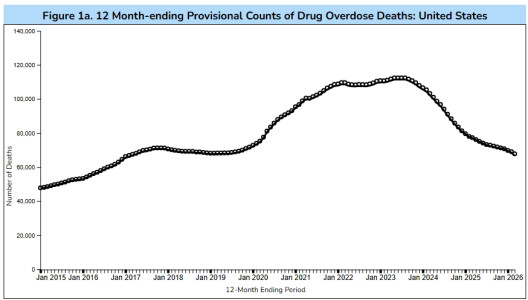
In 2024, the U.S. experienced the largest decline in the drug overdose death rate ever recorded. The official number of drug overdose deaths among U.S. residents was 79,384, a decline of 26.2% from the previous year.
Provisional data from the Centers for Disease Control and Prevention’s (CDC) National Center for Health Statistics indicate there were an estimated 69,973 drug overdose deaths in the U.S. during 2025, a decrease of nearly 14% from 2024.
Despite seeing encouraging progress, the U.S. is experiencing new challenges, including the changing trends in the substances involved in overdose deaths.
According to the CDC, the number of overdose deaths involving cocaine substantially increased from 4,681 in 2011 to 29,449 in 2023. This was followed in 2024 by a 25% decrease to an estimated 22,397.
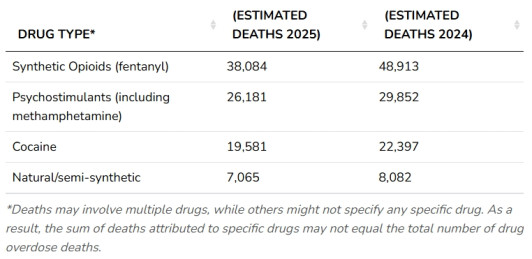
The decline does not mean the crisis is over. Instead, it highlights how quickly the overdose landscape can change and why prevention efforts must adapt. Fentanyl and other opioids continue to contribute to fatal overdoes, and multiple substances can be involved in the same overdose.
The overdose crisis is improving nationally, but the substances involved are changing, and Cuyahoga County demonstrates why prevention and education need to adapt.
Addressing Cocaine-Involved Overdoses in Cuyahoga County
According to the Cuyahoga County Medical Examiner’s Office, cocaine is now the leading drug involved in overdose deaths in Cuyahoga County, surpassing fentanyl-involved deaths.
In 2025, the county experienced 363 overdose deaths, with cocaine involved in 221, or 61% of all overdose deaths. That number is down from 358 cocaine-involved deaths in 2023 and 232 in 2024, but cocaine remains the leading drug involved in fatal overdoses in Cuyahoga County.

Responding to the changing trends, the Cuyahoga County Medical Examiner’s Office launched its Signs of OD campaign in July to increase awareness of the signs and symptoms of cocaine-involved overdoses.
Cocaine is a stimulant, and an overdose can cause serious cardiovascular and neurological complications. Signs may include chest pain, dangerously high body temperature, severe agitation or confusion, rapid heartbeat, difficulty breathing or loss of consciousness.
It is important to remember that cocaine and other stimulants may contain fentanyl or other opioids without a person knowing it. Because of this risk, naloxone remains an important tool for an overdose response.
Expanded access to naloxone has made a significant impact in the effort to reduce fatal overdoses. Naloxone does not reverse the effects of cocaine itself, but it can reverse an opioid overdose if opioids are involved.
Knowing what to look for and how to respond can make the difference between a tragedy and a life saved.
Thrive for Change
Overdose prevention requires giving people information, resources and practical tools that can reduce risk before an emergency happens.
Across Northeast Ohio, the organization Thrive for Change provides community-based prevention, education and support, including access to naloxone and other resources designed to reduce the risk of overdose.
Through their services and connections to ongoing care, Thrive for Change increases the well-being of people who use drugs and improves the health of our communities by providing:
- In person outreach that prioritizes historically excluded communities and strategies to address disparities.
- Distribution of naloxone, fentanyl testing strips, and safer-use supplies distribution in person and by mail.
- Rapid HIV testing, PrEP education, and connections to care.
- Harm reduction and anti-stigma education and consulting by people with lived experience.
- Collaboration and advocacy.
- An overdose prevention resource calendar with information on where to receive support and tools to reduce risk of overdose.
Their work reflects an important principle of effective prevention: people need access to support where they are without having to overcome unnecessary barriers first.
Since 2018, Thrive for Change reports it has trained more than 12,000 people in proper Narcan use, distributed more than 75,000 Narcan kits, and helped prevent more than 700 fatal overdoses.
As the substances contributing to overdoses change, so must our understanding of prevention. This requires staying informed about local trends, knowing where to find resources and ensuring that people who use substances have access to tools and information that can help keep them alive.
You can visit the Thrive for Change website to learn more about their work, order supplies like Naloxone and fentanyl test strips, and learn about any upcoming trainings.
Stigma and the Importance of Person-First Language
Stigma refers to the negative attitudes, beliefs, and stereotypes that society attaches to certain groups or conditions, such as mental illness, substance use disorders, or disabilities.
Stigma can lead to discrimination, prejudice, and marginalization, creating barriers for individuals to seek help, access resources, and fully participate in society. In the clinical setting, stigma and implicit bias can also affect the way individuals receive treatment.
By using people-first language, we acknowledge that individuals are not defined by any pre-existing conditions. Emphasizing a person rather than a person’s condition or diagnosis, people-first language puts an individual before any disability, disorder or illness.
Terms such as “addict” or “abuser” can reduce a person to a behavior or diagnosis. Person-first language such as “person with a substance use disorder” helps keep the focus on the individual rather than defining them by their substance use.
Striving to reduce stigma does not mean minimizing the seriousness of substance use or its consequences, but it does recognize that compassionate, respectful care is an essential part of effective treatment.
At WellLink, the work continues well beyond International Overdose Awareness Day. On Sept. 17, WellLink will present the Northeast Ohio Opioid Education Series, “Managing Stigmatizing Language in Substance Use Treatment.”
The virtual training will give clinicians and other professionals the opportunity to examine how language can contribute to stigma and create barriers to care, while exploring more compassionate ways to communicate with people experiencing substance use disorders.
Visit WellLinkhealthalliance.com to register for WellLink’s Northeast Ohio Opioid Education series virtual training.
How Can I Make a Difference?
International Overdose Awareness Day is a time to remember the people we have lost, and remind ourselves that each of us can play a role in preventing future deaths.
But that doesn't mean you need to be a healthcare professional or part of a large organization to make a difference. Learning the signs of an overdose, knowing how to respond, carrying naloxone, sharing accurate information and challenging stigma are all meaningful ways to support your community.
The 2026 campaign kit from Penington Institute includes resources that can help individuals, organizations and communities raise awareness. The campaign kit includes fact sheets, educational material, social media assets and other information that can be shared.
Overdose prevention does not end on Aug. 31. The drug supply will continue to change and communities will face new challenges. That means the response must continue to evolve too.
This International Overdose Awareness Day, we recognize the important role each of us can play in preventing future overdose deaths. By staying informed, reducing stigma and supporting people with substance use disorders, we can help build communities where more people find the support they need to survive and recover.
Learn more about where to get naloxone in Cuyahoga County by visiting WellLink’s website.