Black History Month: The Importance of Advancing Representation in Healthcare

Black History Month is a time to celebrate the resilience, innovation and enduring contributions of Black Americans, past and present. From pioneering medical breakthroughs to leading public health initiatives, Black innovators have profoundly shaped the healthcare landscape.
Yet, while we honor these incredible achievements, we must also confront the persistent health disparities that continue to affect many communities. Access to quality care, maternal health, chronic disease management, and trust in the healthcare system remain ongoing challenges.
As we reflect on history and progress, it’s vital to understand the importance of representation among healthcare providers and the systemic changes needed to achieve equitable care for everyone.
Persistent Disparities in Health Outcomes
Black Americans continue to experience disproportionate rates of maternal mortality, chronic disease, preventable deaths, and more. These outcomes reflect not only individual health factors, but they are also linked to systemic barriers, unequal treatment and differences in the quality of care received.
A report by KFF reinforces that the Black population fares worse than the white population across the majority of examined measures of health, healthcare and social determinants of health (SDoH), which are the non-medical factors affecting health like socioeconomic status and geographic location.
Examples of the report’s key findings:
• Among adults with any mental illness, Black adults were less likely than white adults to receive mental health services as of 2024.
• 58% of Black adults went without a flu vaccine, compared to less than half of white adults.
• Black people have a shorter life expectancy (74.0 years) compared to White people (78.4).
• Black infants were at least two times as likely to die as white infants as of 2023.
• Pregnancy-related mortality rates are also more than three times higher among Black women compared to white women.
These inequities are compounded by SDoH. When preventative care is difficult to access and chronic conditions go unmanaged, disparities widen and long-term outcomes worsen.
Today, experiences of bias and discrimination in clinical settings continue to affect individuals from minority populations seeking care. As patients feel dismissed, unheard or stereotyped when interacting with providers, these experiences can lead to delayed care, lower adherence to treatment recommendations, and a reduced likelihood of participating in preventative screenings.
Does Representation Among Healthcare Workers Matter?
The answer is a clear and resounding yes. A diverse workforce strengthens patient-provider relationships, enhances cultural understanding and improves health outcomes.
Studies have shown that racial and ethnic concordance, which occurs when a patient and healthcare provider share the same racial or ethnic identity, can improve patient satisfaction and adherence to medical advice.
When a patient feels seen and respected, they are more likely to ask questions and disclose concerns. For those managing chronic diseases, navigating complex diagnoses or addressing preventative health needs, this level of strong patient/provider relationship is essential.
According to a 2024 study by the Journal of the American Board of Family Medicine, patients and caregivers who reported more experiences of discrimination within healthcare settings were significantly less likely to have high trust in their clinicians, with higher discrimination scores linked to lower odds of high trust.
The study also revealed:
• More than 25% of participants reported at least one experience of discrimination.
• Participants identifying as non-Hispanic Black, Hispanic, and non-Hispanic multiple/other races reported higher rates of both discrimination and lower trust compared with non-Hispanic white participants.
• Participants who had previously been given a social risk screening in a healthcare setting, a screening that covers social factors like food insecurity, housing instability and transportation difficulties, reported a smaller negative impact of discrimination on trust.
Another study published through the National Center for Biotechnology Information concluded that racial concordance contributes to a more effective therapeutic relationship and improved healthcare, and emphasized the need for medical education surrounding cultural humility and the importance of representation within the healthcare workforce.
The study also noted that healthcare expenditures were lower among Black patients with race-concordant providers than those with discordant providers.
Black Representation in the Healthcare Industry
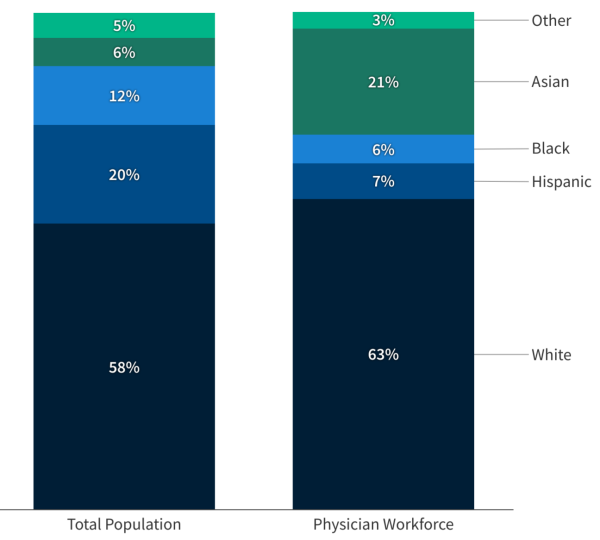
Despite progress in creating a more representative healthcare workforce, gaps persist. While the percentage of Black Americans is approximately 13%, the percent of physicians identifying as Black is far lower.
The graph below illustrates the distribution of people by race and ethnicity in the total population and physician workforce, based on KFF’s analysis of 2023 Association of American Medical Colleges Physician Workforce data.
The lack of representation in healthcare is not limited to hospitals. According to the American Psychological Association, approximately 5.5% of the U.S. psychology workforce identified as African American in 2023. While still low compared with the overall U.S. population, this represents a 1% increase in active African American psychologists since 2019.
This underrepresentation matters because increasing the number of Black providers is a crucial step toward narrowing persistent health disparities in underserved communities.
Making progress requires an understanding of the social determinants of health, and the impact they can have on a community. A provider familiar with SDoH may recognize cultural or structural barriers to care and adapt interventions accordingly to screen for social risks and then connect the patient to proper resources.
A truly equitable system ensures that every person, regardless of background, receives care that is accessible, high quality, and delivered with dignity; care that allows every individual to experience the full promise of our healthcare system.
When diversity and structural change work together, the result is not only improved trust, but measurable progress toward closing persistent gaps in care.
Black History Month and Beyond
Black History Month asks us to reflect not only on the past but also on our shared responsibility to shape a more equitable future.
Persistent gaps in care and underrepresentation in the healthcare workforce do not need to be inevitable. Addressing disparities requires sustained commitment to improving access to preventative services, investing in underserved communities, and building a healthcare workforce that reflects the diversity of the nation, but it is attainable.
Representation among caregivers can lead to real change. It fosters trust, enhances communication and ensures that care is informed by a wide range of experiences and perspectives. Combined with systemic reforms and culturally responsive practices, it can help close long-standing gaps in health outcomes.
As we honor Black History Month, we must recognize that health equity is both a moral imperative and a public health necessity. By confronting disparities and championing diversity in caregiving, we move closer to a healthcare system where every individual has the opportunity to achieve optimal health.